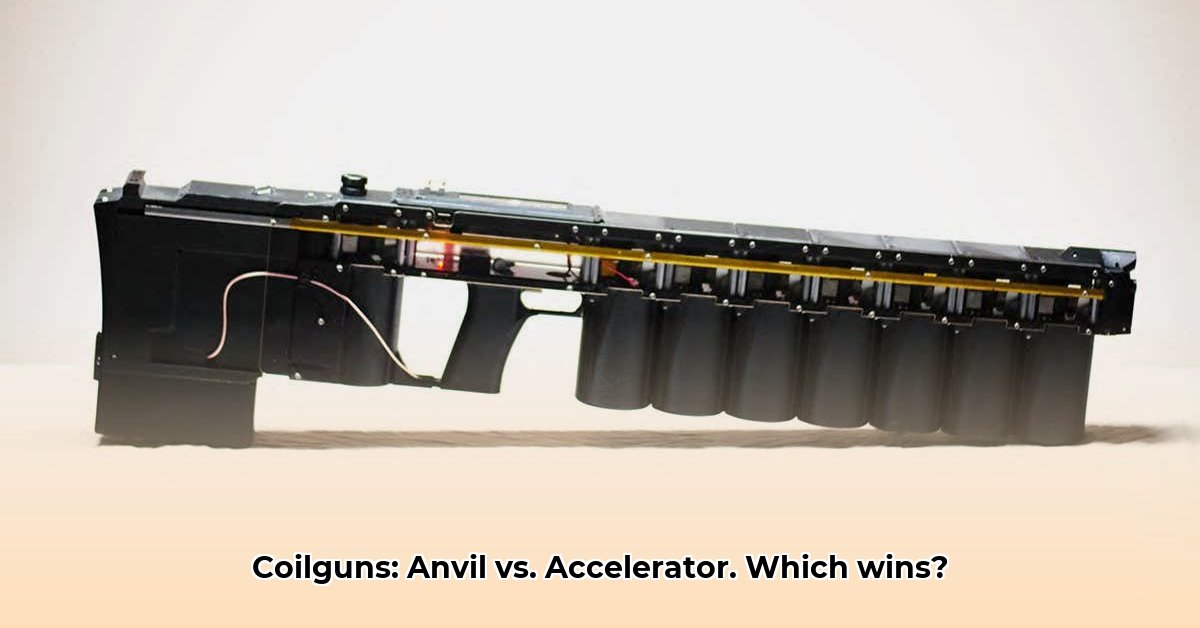
Choosing the right coilgun requires navigating a complex landscape of technical specifications and safety considerations. This comparative review analyzes two leading contenders: the GR-1 Anvil and the Coil Accelerator, highlighting their strengths, weaknesses, and suitability for specific applications.
Railgun Technology: A Powerhouse in Miniature
Coilguns, also known as electromagnetic launchers, propel projectiles using electromagnetic forces. Unlike traditional firearms, they don't rely on chemical propellants. This technology finds niche applications in various fields, from specialized military applications to industrial uses. The GR-1 Anvil and Coil Accelerator represent different approaches to coilgun design, each tailored to distinct needs.
GR-1 Anvil: A Deep Dive into High-Power Performance
The GR-1 Anvil is designed for maximum impact. It boasts a powerful muzzle energy of up to 100 Joules, capable of delivering significant stopping power. Its dual Clamped Quasi-Resonant Inverter (CQR) system delivers consistent performance. However, this power comes at a cost: a relatively low rate of fire – 100 rounds per minute at reduced power levels—and a limited barrel life of approximately 50 shots before requiring maintenance. The GR-1 Anvil utilizes ferromagnetic projectiles ranging up to half an inch in diameter, offering some degree of versatility but demanding careful projectile selection to avoid damage. The Anvil's reliance on a large capacitor bank also impacts portability, making it less suited for mobile operations. Does the trade-off between power and portability make the GR-1 Anvil the right choice? The answer depends on your priorities. The considerable shipping restrictions in various US states and counties also need to be considered.
Coil Accelerator: Speed and Precision Redefined
The Coil Accelerator presents a stark contrast to the GR-1 Anvil. While precise specifications regarding muzzle energy are unavailable, its distinguishing feature is its exceptionally high rate of fire—a remarkable 1200 rounds per minute. This suggests a design optimized for rapid deployment, potentially using lighter projectiles. While the power delivery system remains undisclosed, its capacity to sustain such a high firing rate suggests innovative engineering solutions. The lack of publicly available data, however, presents a considerable obstacle to a complete comparison. Could this high rate of fire be coupled with less-lethal projectile options, expanding the Coil Accelerator's utility to law enforcement or civilian applications? The information gap hinders definitive conclusions.
Comparative Analysis: A Head-to-Head Showdown
The following table summarizes the key differences between the GR-1 Anvil and the Coil Accelerator, highlighting their distinct strengths and weaknesses:
| Feature | GR-1 Anvil | Coil Accelerator |
|---|---|---|
| Muzzle Energy | Up to 100 Joules | Unspecified (likely high) |
| Rate of Fire | 100 rounds per minute (reduced power) | 1200 rounds per minute |
| Projectile Type | Ferromagnetic, up to 1/2" diameter | 385-grain solid (or possibly less-lethal) |
| Power Delivery | Dual CQR System | Unspecified |
| Regulatory Status | Significant shipping restrictions | Unknown |
| Portability | Low | Potentially High |
| Barrel Life | Approximately 50 shots | Unknown |
Risk Assessment: Mitigating the Dangers of High-Powered Coilguns
Both coilguns operate at high voltages and launch projectiles at dangerous velocities. Therefore, using them demands rigorous safety protocols. Potential hazards include electric shocks, projectile injuries, and malfunctions. The GR-1 Anvil's LiPo battery adds further complexity to risk assessment. The Coil Accelerator's incredibly high rate of fire necessitates stringent safety measures to prevent accidents. Comprehensive training and adherence to established safety protocols are critical for responsible usage, regardless of the chosen model.
Conclusion: Choosing the Right Coilgun for Your Needs
Selecting a coilgun depends heavily on your specific needs. The GR-1 Anvil, with its high muzzle energy, is suitable for applications requiring maximum impact, while the Coil Accelerator, with its unprecedented rate of fire, is likely preferable for situations demanding rapid deployment, potentially involving less-lethal options. However, the lack of detailed information on the Coil Accelerator limits a comprehensive comparison. Further research and the release of more complete specifications are needed for a more definitive evaluation. Always prioritize safety and maintain a thorough understanding of the risks associated with high-powered coilguns.